
A Conversation with SFHV Grant Recipient, Willow Roots
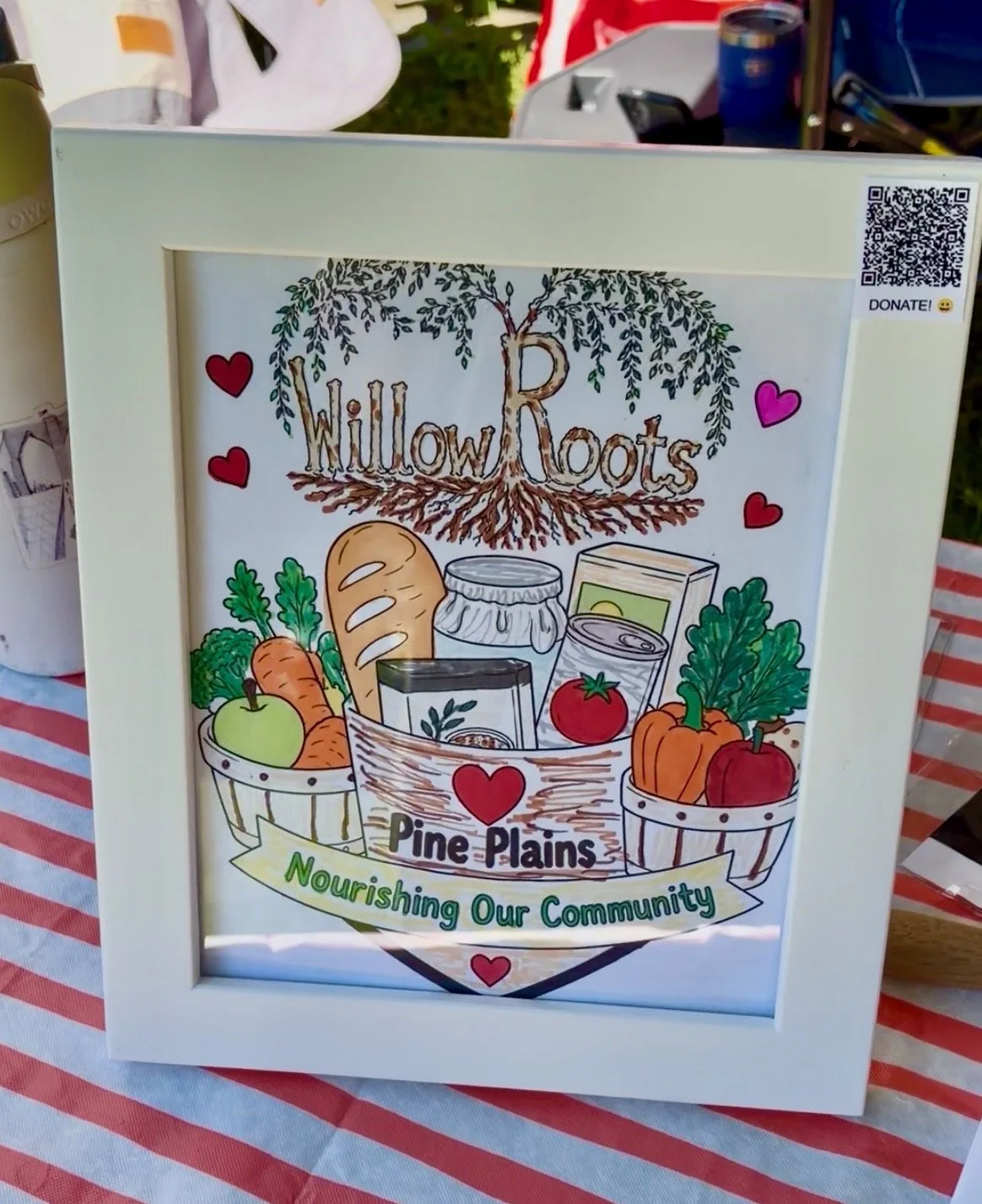
Pine Plains, NY — Willow Roots began as an urge to support and give dignity to one neighbor in need. It has since grown into a food-scarcity and household goods resource that now serves nine Hudson Valley townships centered around the Pine Plains Central School District.
Slow Food Hudson Valley’s Valerie Kathawala sat down with founders Nelson and Lisa Zayas to learn how they channeled their compassion, skill, backgrounds, and resources into a lean, effective non-profit.
Through innovative micro-projects and partnerships, along with a commitment to offering respect and choice to the people they serve, as well as meeting people in need where they are, WIllow Roots connects a widening circle of local farms, non-profits and individuals in mutual support. Over the past year, Willow Roots lost the rent-advantaged space it had been working out of since 2019. Faced with the prospect of increased fixed costs, Nelson and Lisa feared they might have to shutter this vital community resource.
This summer, Willow Roots moved into a bright and inviting larger space, ideally located close to the school. In June 2026, Slow Food Hudson Valley awarded Willow Roots $10,000 to support the non-profit’s work during this critical transition. As Slow Food Hudson Valley Chair Phil Hayes notes, the award “really gets down to the core of our work as a chapter and being involved in the community and helping our neighbors who are also doing good for others.”Read on to learn how Willow Roots embodies Slow Food’s values of good, clean, fair food for all in the Hudson Valley.
How did you choose the name Willow Roots and what does it signify?
Nelson Zayas: That's pretty funny because when we first created the non-profit, since Lisa and I were married, based on the rules, we could not be a majority on the board. That meant we had to find three other people. So we basically asked people we knew to join us on board. We got three people who believed in what we were doing and joined. Lisa wanted to call the organization the We Care Project. But at our first board meeting, she was outvoted in favor of Willow Roots. That first decision, that's where she realized Willow Roots does not belong to us. The name Willow Roots comes from how roots go through the soil to support each other and other trees and to communicate a lot that’s happening in a way you don't see. It’s that concept of a lot of work being done behind the scenes.
What are your roots in the Hudson Valley?
I moved to the Hudson Valley as a physician's assistant. I ran a small clinic in Woodridge. But I always had a second job in different emergency rooms. Wednesday was my late day, so I would go into the school and just kind of help out with the kids in kindergarten and first grade there. I realized that there were teachers who were great with language arts, but not so much with math and science, especially science. I started teaching a lot of science lessons for them, and I even put together an electricity unit for them. One day I came home and said, “I think I want to be an elementary school teacher.” So I walked away from medicine. In 2003, I moved to Pine Plains to teach. Lisa joined me in 2011 and we got married in 2015.
Willow Roots began as a super small operation to feed just a few individuals. How did that come to be and what did it look like, day to day?
We started in 2019. We got word that a veteran in town’s benefits were going to be cut. So Lisa started making meals for him. Then that gentleman started sharing the food with the person renting below him. We found out about that, so she started cooking for him. Then this other single mom who was sort of homebound called Lisa and said, “I hear you’re cooking meals.” Lisa's like, "Well, I just cook for some friends.” And she says, "Well, how can I become a friend?” So Lisa started cooking for her. It got to the point where she was cooking for 10 households.At that point, I heard about a lady somewhere feeding neighbors who got in trouble with the Department of Health. So I looked into that. We realized if we had a 501c3, we’d be protected. We officially incorporated in June 2019. When the pandemic hit in March 2020, we were already operating, so we were able to ramp up operations to meet that need. We started on our front porch, just handing out vegetables from other pantries when they had extras. But our space got too small and we had to find another place. For seven years, we operated out of a place where the owner never raised the rent, he covered the electricity and the plowing.
But last year there was a change in circumstances and you had to move?
Lisa Zayas: Yes, we thought we were going to have to close shop, once we lost our lease.
Nelson Zayas: I must have looked at 20 or 30 properties in town, trying to buy something so we would not be at the mercy of a landlord. We thought we would have to close. But once again we scrambled and found a place, which is where we are now. We’re very close to the school. We used to use a school bus for the work-study program, but now the kids can just walk over, and we’re collaborating with the school more.
Describe your model for connecting farms, farmers, and families in need.
Nelson Zayas: We network with farms to get food to give to families. At first we got donations from other food pantries after their distribution. Regional Food Bank, Long Table Harvest, they gather from different farms for food pantries. Later we picked up an order from Sky High Farm, and in talking to the Sky High people, they didn’t realize we were a pantry. They were like, "Why aren't we working with a pantry right here?” That’s how our association with Sky High started, which was a blessing.
From there, it sounds like things took off with grants, along with support from farms, community gardens, and the school. How did you decide to focus on the Pine Plains Central School District?
It’s nine townships, in northern Dutchess County and southern Columbia County. We live in Pine Plains and we deal with a lot of kids who go to the school, so it would have been kind of hard if one family heard about us, and we had to say, "Well, you live in Stamfordville or Elizaville, so we're not going to take care of you.” So we decided to make it the entire school district.
You coordinate with other food pantries to ensure coverage three weekends a month, is that correct?
Yes.
Beyond the food pantry, which services do you provide?
Nelson Zayas: We also have a thrift store, work-study program, a welcome room, and a giving box. The welcome room is stocked with toiletries, cleaning products, and pet food that we get from Animal Farm Foundation. So we try to take care of the whole household.
Lisa Zayas: The giving box is really special. I was talking to Mr. Lasella, a teacher at the school, about setting up boxes to collect food. I told him I would really like a nice box that we can stock 24/7 and have food in there that people can go to on their own time. So he asked me to come talk to the students. They made a beautiful box that we have at the back of the library so the kids can go out there and get granola bars and drinks and stuff like that. One time I put a whole bunch of celery in there! Then we post right away so people can go get it. Within two hours, all the stuff is out of the box. We also do Willow Roots Networking Neighbor. We had a lot of people dropping stuff off on our deck — big items like couches. We don’t have the space to store it, but we’ll network for you.
How does Willow Roots’ work align with Slow Food’s mission for good, clean, fair food for all?
Nelson Zayas: It’s the whole idea of respect at all levels. One thing we're able to do at this new place, which is something I've been wanting to do for a long time: we can now have a supermarket feel to the pantry, where we have carts, where everything is labeled. So again, giving respect, more of a feel like they're shopping for their family as opposed to a pantry where you're told “Here's a bag.” We've always been a choice pantry, even at the previous location, but the choices were, for example, “green beans or corn?” Now they can walk through and choose on their own.
What does Slow Food Hudson Valley’s grant enable Willow Roots to do that it could not do before?
We’ve earmarked this money to help cover the rent, which is phenomenal. There’s a big jump in our expenses with the new location. Lisa and I hate taking any money and not putting it towards purchasing food. So having alternate funding sources to help cover that overhead is a humongous help. None of us get paid, we’re all volunteers. We’re very frugal with our money. We try to get the best deal on food and toiletries so it’s great if we can use the funds for overhead.
What are the best ways for people to support Willow Roots?
Nelson Zayas: Come help out! On distribution days, we’ve had out as much as 5,000 pounds of food to give away. Or funds.
Lisa Zayas: Check out our website and our Facebook page. We always try to be very transparent. We post everything we do. Get the message out. It helps so much to have people talking about us.
