
Berkshire Agricultural Ventures (BAV) is a farm-serving nonprofit doing critical work to lower barriers and increase opportunities for farmers in the Berkshire-Taconic region. As a direct result of funds raised at Slow Food Hudson Valley’s Spring Benefit, our chapter was able to donate $20,000 to BAV in support of their mission.
To spotlight the specific ways the generosity of SFHV members and partners benefit our grantees, SFHV board member Valerie Kathawala spoke with three members of the BAV leadership team to learn more about how BAV develops and delivers a powerful set of tools and services that keep farmers farming across Columbia, Dutchess, Berkshire, and Litchfield counties, and how that work aligns with Slow Food values of good, clean, fair food for all.
SFHV Please share BAV’s origin story in a nutshell.
Rebecca Busansky (BAV Executive Director) BAV started in 2017. It was founded by Neil Chrisman and Joel Millonzi, who were very interested in how to keep farmers farming. They learned a lot through the whole Slow Money world, and through [Slow Money founder] Woody Tasch. They went to a Slow Money conference in New Mexico back in the day and really started looking into the economic development angle of how do farmers continue to farm? What does the business side of farming look like for them? What is the access to capital? What kind of support services do they need? Neil and Joel drove around and talked to farmers and asked them questions to come up with an initial model for BAV. Then quickly Tom Gardner joined forces with them and helped carry it along. Until about 2020, BAV had two, maybe three employees. It was probably in 2021, when Shannon Smith and a whole host of people joined and really began to access USDA grants and other funding and they really built this out. And we continue to grow!
SFHV Why did it start here in the Berkshire-Taconic region?
Rebecca Busansky It was sad because Neil Chrisman died the week before I began at BAV. So I never got to sit down and talk to him, which I would have loved to do. But I was handed all of his folders and went through them. From the beginning, he had mapped out the Berkshire Taconic region: Berkshire, Litchfield, Columbia, and Dutchess counties.
SFHV BAV’s mission statement is to support the development and viability of local farms and food businesses to build a thriving and equitable local food economy. How does that play out concretely?
Audrey Hackett (Communications and Development Manager) BAV provides specific, one-on-one services to farmers and food businesses. So it plays out as a very concrete, lived provision of technical assistance to farmers; low-interest, flexible loans, network weaving to help farmers access relationships that could be important to grow their business. We work with a very specific toolkit that we have refined over the nine years or so that we've been a nonprofit. That toolkit helps strengthen farmers' businesses. Sometimes that means helping them grow, sometimes it means helping them become more sustainable just at the level where they are. Layered on top of that is food system work that we have increasingly moved into, where we're also playing a role in bringing funds into this region to look at how farmers, for example, can connect to institutional buyers; mapping the landscape for livestock farmers and how to connect them to meat processors and what needs to happen in that value chain. So we're working both on a very concrete, practical, creative, flexible level with individual farms and food businesses, and in this more holistic way as well.
SFHV Was there a model BAV followed or is this something BAV has innovated itself?
Shannon Smith (Director of Lending and Finance) There are many different models used by organizations locally, regionally, and even nationally that tie together some of what BAV does. We work with a lot of those organizations, trying to be aware of all the resources a farmer could access. We want to help develop those relationships so that we can make warm handoffs when it's advantageous to the farmer, or where we can collaborate with other organizations to support a farmer's grant application or a land transition project. It takes everyone's talents and resources to make some of those projects happen.
Our model is, as Audrey mentioned, very one-on-one and relationship-driven. So, for example, we visit almost every farm we work with in the beginning, and if not multiple times throughout our relationship, because we're not just taking an intake form for one particular service. We're looking to ask questions: What's really happening on your farm? Do you have security on this property? Are you able to invest in the soil where you're farming? Are you worried about losing your lease and having to move on? Are you able to invest in infrastructure like hoop houses and high tunnels? Are you particularly at risk of microclimate and climate change?
A lot of farmers we work with are dealing with huge shifts in precipitation and water table issues. We know from the science that our region, and this part of the region in particular, will be more vulnerable to erratic precipitation. So that's a question we ask when we're standing out in the field. It can mean different things for different farmers: a bonus for some, but a risk factor for others. We also look at how this farmer is sustaining their own living income: Are they able to take care of themselves? Are they taking care of their own health, or is it a situation where they're putting their body on the line to make the farm successful? So, we try to take in all that information, not looking for how to deploy this one solution, but rather what's the big picture here, so we can be thinking of all the different resources that might help them over one year, two years, five years, ten years.
Rebecca Busansky Adding to that, our solutions are very place-based. Four or five years ago, we started getting into that whole world around local meat processing and the importance of that in our region, for example, and now farm to institution. During the pandemic, the floor really fell out of sales for farm-to-table restaurants. That hasn't really come back. So we’re helping farmers find new market channels. We have a number of sister organizations we talk to and learn from and they learn from us and we all share. The research is out there that farmers need access to capital. That's a huge obstacle to their growth, and we can help unlock that growth with our low-income, very flexible financing that meets farmers where they're at. So that kind of lowering barriers, increasing opportunities is our sweet spot.
Audrey Hackett BAV really listens to farmers. That loops back to the origin story, with these founders literally on the fence talking to a farmer in the field. In my time with BAV, I've seen a number of examples where a new program area, a new project comes out of what farmers tell us directly what they need. For example, last spring our Climate Smart Agriculture program manager did a program review process with stakeholders, mostly farmers, and a few other partners, in light of the federal government turning its back on climate change [funding]. We asked: What do farmers in our region need now and how can BAV best help them?
That was a very attuned listening process, out of which came a new program we're launching in early 2027. It’s called climate resiliency coaching, which is more of a wraparound approach to helping farmers not only identify issues on their farm, but begin to prioritize and implement solutions with some small seed grant funding BAV would provide. I think that is a hallmark of our approach: we're listening to farmers and from the ground up, trying to bring them the combination of solutions they need.
SFHV You've just highlighted a few of the major challenges to our regional food system. If you had to identify the top five, what would you say they are?
Rebecca Busansky Access to capital, climate change, rising fuel costs, tariffs, and the federal government pulling back and canceling grants directly to farmers.
Shannon Smith In our area, there are more small farms. Smaller farms can really be overlooked in federal programs. Some state programs are available, but even at the state level, the smaller farms don't always have the resources, or are not big enough to compete for the support services offered by the public sector. Many small farms don't last a long time, or they last only on the backs of farmers who are the owner-operators. So figuring out how to build farm viability — resiliency — is something we talk about a lot: how to keep those farmers farming.
There's a whole spectrum of what it looks like to keep farmland in active use. Farm access is a really important part of that. We have strong relationships there. But really, we sit in that space where, if we can keep farmers farming on the land they have, and if they have viable farms that when they are ready to retire, and we know a lot of farmers are facing retirement age, they would have something to sell. It's very hard to sell a failing business. It's easier to sell or pass along to the next generation a viable business.
SFHV Some of our readers might look at the name of the organization and ask what it has to do with us here in the Hudson Valley? But BAV actually serves Columbia, Litchfield, and Dutchess counties as well as Berkshire County. How was that scope determined, and how do you communicate that it's not just Massachusetts farms and farmers you are serving?
Rebecca Busansky As you can imagine, we've worked on this a lot. Again, this was the name the founders agreed on, and this was the catchment area. We have worked on the branding, really trying to bake those four counties more into all of our materials to communicate that.
Audrey Hackett It is a communications challenge. We have this name, and yet, nine years into being an organization, the name has currency, and you don't drop a name lightly. So we've tried to tread a middle path. Last fall, we refreshed our brand within our logo to specifically spell out the four counties we work in because people think “Berkshire, well that’s Berkshire County.” It’s an imprecise and imperfect invocation of the Berkshire region. I think in some ways it pushes us to be very clear in our communications outside of the logo and the name, to explain who we are and who we work with and serve.
Shannon Smith I’ll add that food system resiliency is not measured at some arbitrary county line. We know so many of our farmers are selling products in a 20-, 30-, 50-mile radius. Many of them are going down to the city. Many of them are not. Many of them rely on sales across state lines, which, especially for livestock and processed meat, comes with its own body of regulatory hurdles and challenges that we've done a lot of work to address. So the farmers certainly aren't paying attention to county lines. Customers certainly aren't paying attention to county lines. When you look at a sense of place and the scenic beauty of where we all live and work, it's not specific to a town or county, it's larger than that. So we want to look at the fluidity of economic activity and the fluidity of relationships with those places, and look at it at a system level.
SFHV All of these individualized, holistic, and wraparound services come with a price tag. What are BAV's main revenue sources?
Rebecca Busansky Like most healthy nonprofits, we have a diversified stream of revenue. So we have federal and state grants, and we've come to rely more and more on individual contributions and foundation and corporate donations.
SFHV Has the balance changed significantly in the past few years?
Rebecca Busansky Yes. We rely more and more on the latter: the individual, foundation, corporate line, as one might imagine. We’ve also been fortunate enough to be awarded recently a couple of USDA grants for our farm-to-institution work. So while we were nurturing this seed, this idea of farm-to-institution work, it really was in this late winter/spring when we were awarded two USDA grants that really brought our farm-to-institution work to an entirely next level. So that was very exciting.
SFHV Was that the Patrick Leahy Grant?
Rebecca Busansky The Patrick Leahy Grant is more about local beef, but especially the Regional Food System Partnership Grant. That's a two-year planning grant where we brought partners across our whole region together to develop a strategic plan for how we would increase the connection between farms and institutions, and strengthen those value chain connections in between. So aggregation, distribution, and then getting those into hospitals, colleges, universities, schools, early childhood centers, all of that work. That's been wonderful and exciting.
SFHV Along those lines, this summer BAV received a $20,000 grant from Slow Food Hudson Valley. Please tell us how that will plug into the work that you're doing, and if you already have those funds earmarked for specific regions or projects, or seeding something new.
Rebecca Busansky Well, first and foremost, we're really so happy about this grant. It is quite wonderful. So thank you all again. This is going to support our work in Columbia and Dutchess Counties with farmers there who we are working with in a couple different ways. That sort of individualized business technical assistance Audrey was talking about earlier, really our whole menu of what we offer farmers.
We are also in the process of launching our Farm Business Accelerator program, and it is open to farmers in our whole region. Some of these funds will go to supporting our Columbia and Dutchess County farmers. We have a few applications already from New York farmers that we're excited about. [Applications are open until October 15.] Lastly, our farm-to-institution work will touch all four counties, and these funds will be really helpful on the Columbia and Dutchess county sides of that work. There's a lot of good work to be done, and we're very grateful to have these funds to do that.
SFHV It feels like a very natural integration of Slow Food values.
Rebecca Busansky Absolutely. I will add that in the funding space right now, this kind of funding, earmarked for Columbia and Dutchess counties, but general operating funding, is the biggest gift you can give a nonprofit organization these days. So thank you all again.
SFHV Can you circle back to the Farm Business Accelerator program to tell us more?
Audrey Hackett It is a cohort-based program where we're expecting up to 20 farmers. The idea is to work in a sustained way over two years, coming together six times a year for workshops and farm tours, for peer learning, peer connection, and community building. Additionally, farmers will work one-on-one with a matched technical assistance provider on issues specific to their farm. Hopefully, all of that folds in with what they're learning in the group setting. There will also be some implementation funds to allow participating farmers to begin to work on projects they've identified as being important for the financial and business health of their farm businesses. We hope through this program, which we are offering for the first time, to build a strong cohort of farmers equipped with new business tools to promote the sustainability and future focus of their farm businesses. That doesn't produce change overnight. But those kinds of tools help farmers create more resilient businesses that build a stronger food system over time.
Rebecca Busansky Peer learning, bringing a cohort of farmers together, we know again from our own experience and from the research that peer-to-peer learning is really important for farmers. They learn best from each other. It could be that there'll be a couple subgroups, for example by business type, or by newer or more experienced farmers.
SFHV Is there anything about the BAV mission that prioritizes what I'll call, for lack of a better term, environmentally responsible farming?
Rebecca Busansky We work with the whole spectrum of farmers, and I think in our workshops, in our climate work, in our experience, we're really trying to move them across that spectrum. But it's important to meet farmers where they are and try to help them along the path. So we don't work with just regenerative farmers, for example. We really look at it more from a holistic angle of how can we help make that movement towards better, environmentally responsible farming. There's no question that climate change underscores the need for that environmentally responsible farming. So all of the risk mitigation and adaptation work we do with farmers is to deal with this new, unprecedented weather that's not even that new anymore and isn't going away. We know that there's a whole host of environmentally responsible farming practices our farmers need to literally weather this storm.
Shannon Smith I would add that we're cautious to push carbon reduction and regenerative farming as things farmers should be doing because we know farmers are on the leading edge of being victims of climate change. So most of what we talk about with farms is adaptation, playing defense against risks, rather than putting the burden of fixing the problem on their shoulders. We love it when farmers are already thinking of soil wealth and soil health and managing runoff and minimizing tilling, for example, as ways of mitigating further damage. But really, the cost of mission for those kinds of farming techniques can be very high. So, as Rebecca mentioned, we lean into where they are, but adaptation tends to be what we talk about more.
Audrey Hackett I'll just add maybe a more philosophical point, which is that we recognize that in this region in particular, farmers are the stewards of our open land. They have a personal need and interest to succeed as farmers, but in a way they're holding that land and holding the values associated with that land for all of us. So that's a kind of a sacred responsibility I would say, and farmers have different approaches to that. As Shannon and Rebecca have both mentioned, to thoughtfully meet them where they are and where appropriate, introduce ideas, approaches, tools that can deepen the meaningfulness of their stewardship of the land, while also allowing them to live there and make a livelihood, it’s balancing a lot of things. But I would say most of the farmers we've talked with and work with have a very lively sense of mission around farming that involves feeding their community and connecting with our environment, and stewarding something to the next generation. All of that is inherent to farming. Our farmers are very aware of that, much more aware than we who don't farm could ever be, really.
SFHV Can you speak about the ways that BAV supports underserved or historically marginalized farmers through your programming?
Rebecca Busansky I think we have done a lot of work to create and strengthen partnerships with a number of not just underserved or historically marginalized farmers, but farmers and farm-serving agencies that focus on that. One good example just outside of Great Barrington is Multicultural Bridge, which runs Solidarity Farm, where they have land that's serving a lot of different farmers, would-be farmers, home farmers growing culturally appropriate foods. I think that work's been important. We continue to try to reach out and to work with farmers, especially underserved farmers, to proactively offer our services to them.
Shannon Smith I think that's a good way to frame it. We look to do outreach, but so much of that outreach depends on having good relationships in the first place. So we've really been intentional about developing these relationships with organizations that are already in community with marginalized communities. It's helped us learn a lot about their needs, priorities, and experiences in dealing with the farming industrial complex. We've learned to take things slower. We've learned to lean into the work they're already doing. But still bringing the same tools: a strong combination of technical assistance and capital, and capital in particular. This is where I've done a project with an organization that is leading a grant in New York State for farmers of color, and learning more about their access to capital and their comfort in dealing with conventional capital sources, or even non-conventional sources, or even experiences of coming into a bank or a credit union, or trying to use a credit card to finance materials purchases. This can be so difficult to navigate and evoke so many emotional responses. We’ve leaned into the work of learning to stand beside them in those situations, to be a navigator and a support system.
SFHV Could you leave readers with a story of one specific program or project you feel you could either say has had the widest impact, or maybe something that was very narrow and just changed one farm, or something that had a positively surprising outcome?
Shannon Smith We all decided that this was the hardest question!
My response was: our goal is to be systems-level thinkers. So nothing we do is in a vacuum. We've talked about this throughout this conversation: nothing we do is about just helping this one farm do this one thing. A lot of what we do looks at how a farm relates to other farms and what its role is in the system. Are they also doing distribution? Are they also doing processing? Are they sharing CSA products? All of those things matter.
SFHV Which is a good answer!
Shannon Smith That said, one specific example is a farm in Columbia County we've gotten to know over the years. I don't want to name it because we don't necessarily have permission to share that in this venue. But this farm raises vegetables and livestock. It had undergone some leadership changes, but has a really great parcel of land with a beautiful viewshed and a farm store. They do value-added processing, meaning they produce products that are made from their farm products, and they sell them at their farm stand and through their CSA. They wanted to do more value-added products to diversify what they could offer their customers and to make more use of the products they're producing. We matched them with a consultant who has helped them evaluate their value-added processing opportunities: What would be a good fit for the market? What fits into the materials they have? What would be the cost points for those products? That helped them hone in on what would make sense for their business, and what would make sense for what they're producing. We talked with them about potentially doing more meat processing, potentially on their site, and what the cost-benefit of that work would be. They could raise more livestock, but this would also come with all sorts of new operational challenges. It would be a great resource for other livestock farmers in the area. Would that bring synergies to the whole system? We've also provided a loan to them for a critical piece of equipment that was not going to be financed another way because it was used equipment. It's really difficult to get a loan for used equipment. But it was a great fit for what they needed.
It's very farmer-led. They're learning and they're making the decisions, but matching them up with these resources at these junctures of decision-making, their confidence has blossomed, and I think their P&L has blossomed. The opportunities in front of them keep getting more attractive. So we love that example because they also fit into the successes of other farms near them.
Audrey Hackett That example underscores the relationship basis for our work. And this farm is not unique. We’ve worked with many other farms at different times, and stay in touch with them. We're just there to provide support or an impetus or an idea or a connection that they then take and run with. It's also an example of how it's not just an art to work with a farmer. It's an art for the farmer to work with BAV and to know how to use us wisely. Because we have a team of people who are expert, good-hearted, knowledgeable, and here to help. When farmers are able to access and then use that to take their business to the next level, that's extremely gratifying. It’s what we're here for.
SFHV If readers are learning about BAV for the first time here in this interview, what would be the best place for them to learn more about your mission and potentially support it?
Audrey Hackett They should certainly check out our website and subscribe to our monthly newsletter. We are somewhat active on social media, so our Facebook and Instagram accounts will give them a sense of what's going on.
SFHV Thank you.
This interview was conducted in September 2026 and was edited for clarity and concision.
Photo details:
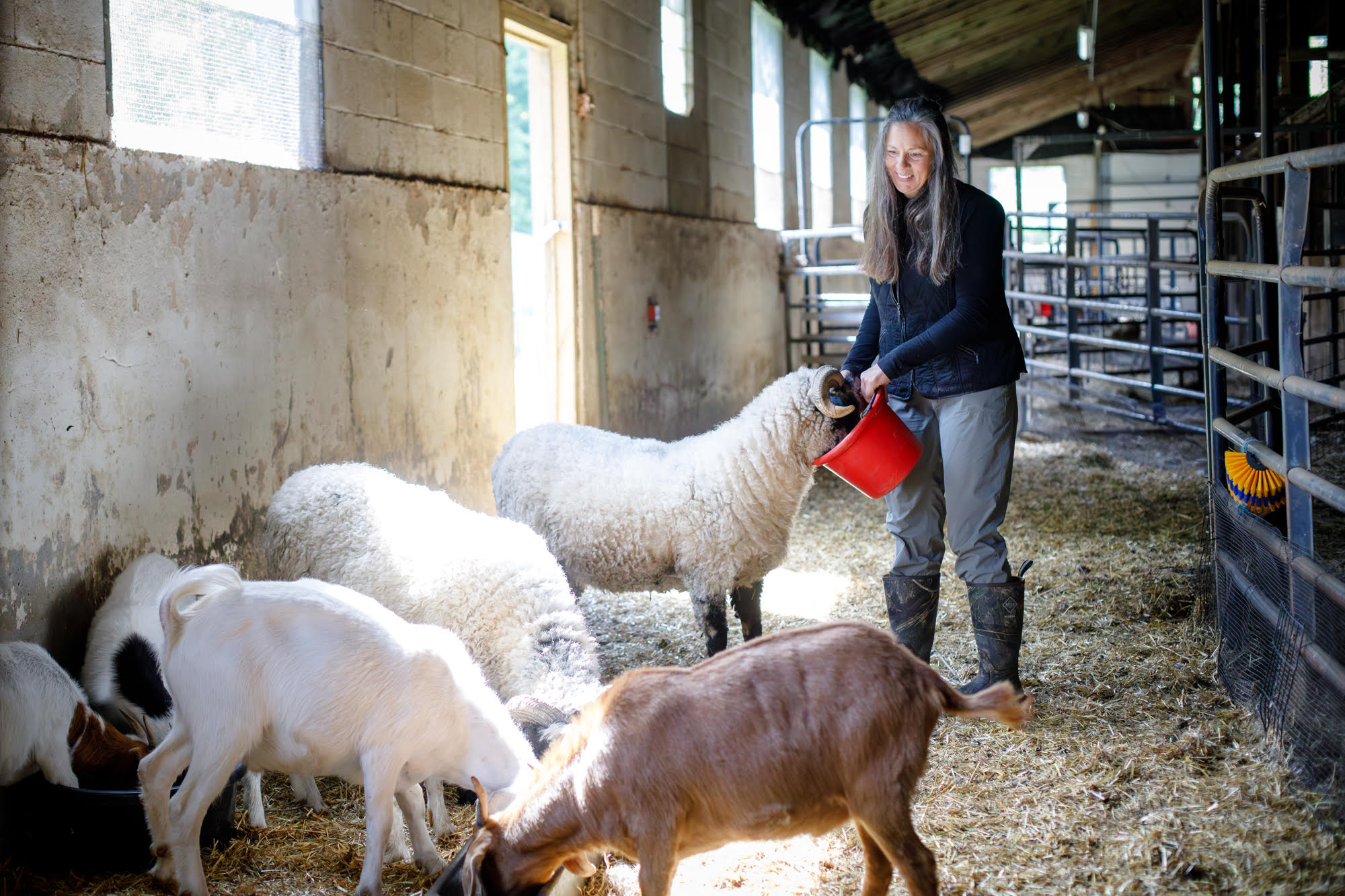
(Sheep image) Farmer Kelley Babbin and her flock at Howling Flats Farm, which BAV has supported with low-interest loans and business technical assistance. Photo by Stephanie Zollshan.
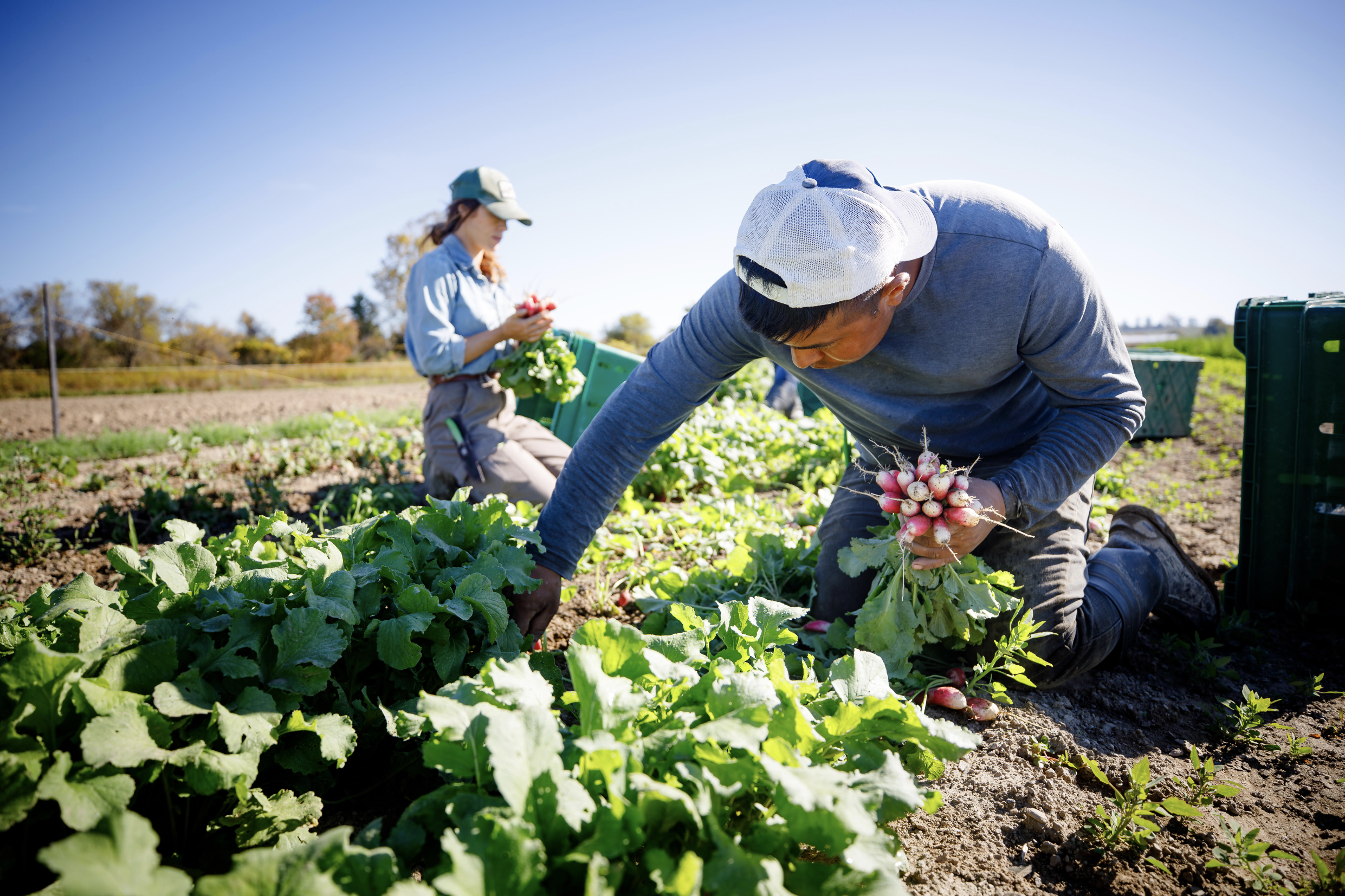
(Harvest image) Radish harvest at MX Morningstar Farm, which BAV has supported with low-interest loans and business technical assistance. Photo by Stephanie Zollshan.
